Oak Knoll District of Napa Valley: A Visitor’s Guide to the AVA
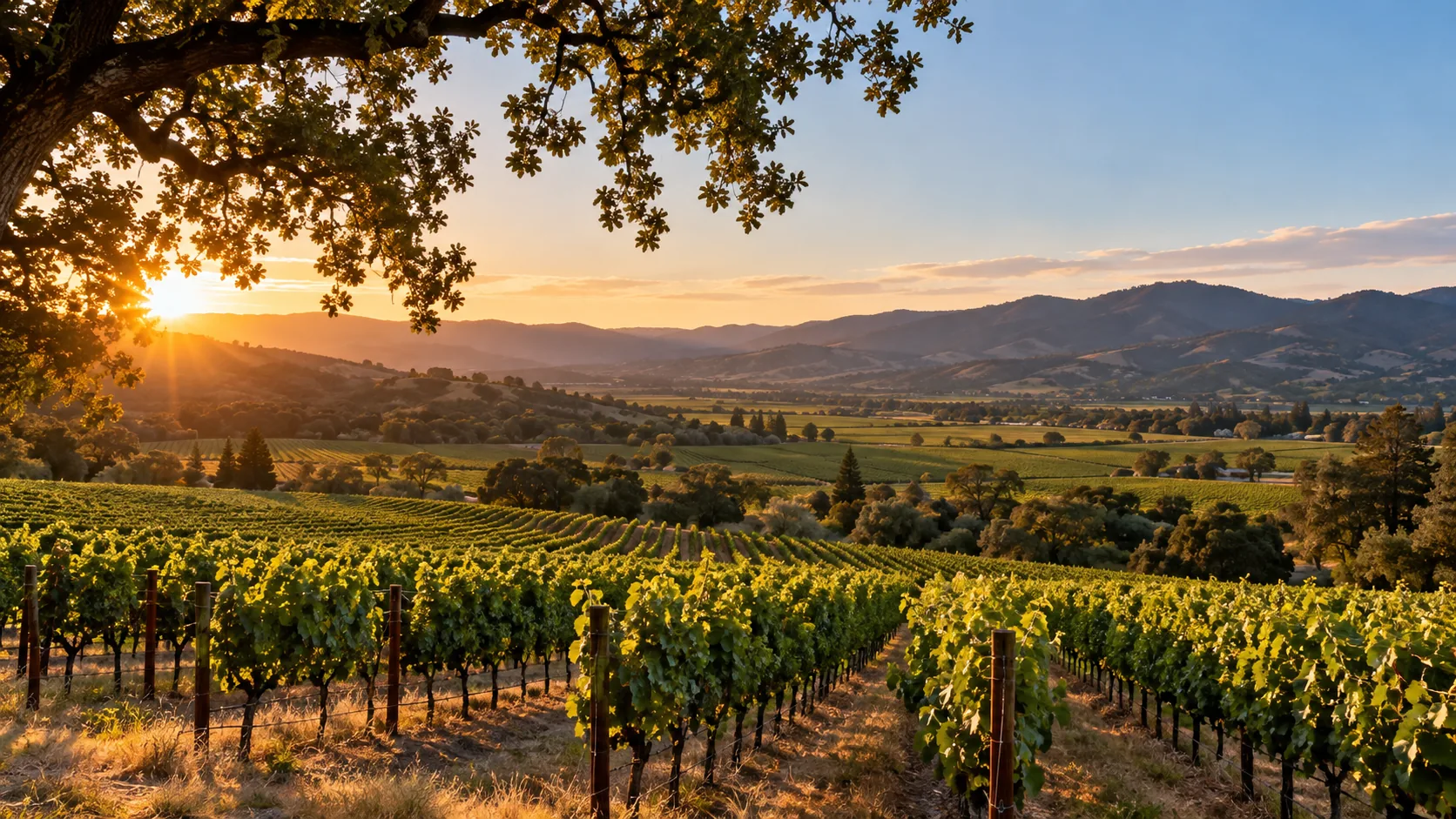
The Oak Knoll District is the first stretch of vineyards you reach driving north out of the city of Napa. It is also one of the coolest corners of the valley, and that cool air shapes every glass poured here.
We have farmed our 33 acres in Oak Knoll since 2000, so we know this ground well. This guide covers what the district is, why its wines taste different, which wineries to visit and how to plan a day here. For a wider look at the valley, start with our guide to the best wineries in Napa Valley.
Key Takeaways
- The Oak Knoll District became an official AVA in 2004. It is one of Napa Valley’s 16 sub-appellations.
- It covers about 8,300 acres on the valley floor between the city of Napa and Yountville.
- Bay air keeps it cooler than up-valley regions, so wines show fresher acidity and softer edges.
- Merlot, Chardonnay and Cabernet Sauvignon are the district’s leading grapes.
- It sits minutes from downtown Napa, which makes it the easiest wine region in the valley to reach.
What is the Oak Knoll District AVA?
The Oak Knoll District AVA is a federally recognized wine region on the southern floor of Napa Valley, just north of the city of Napa. AVA stands for American Viticultural Area. It is the U.S. version of a wine appellation: a named place whose climate and soil give its wines a recognizable character.
Here is the district at a glance:
| Fact | Detail |
|---|---|
| Official AVA since | 2004 |
| Total size | About 8,300 acres |
| Planted to vines | About 4,000 to 4,200 acres |
| Location | Valley floor between the city of Napa and Yountville |
| Main roads | Highway 29 and the Silverado Trail |
| Parent appellation | Napa Valley AVA |
Oak Knoll has more vines than any other sub-region that sits fully inside Napa Valley, according to Wine Folly. Yet it gets less attention than famous names like Rutherford or Oakville. Most visitors drive straight through it on the way up-valley.
The story here is old. A sea captain planted vines on this land in the 1850s and named his farm Oak Knoll. By 1860 it was the largest vineyard in Napa Valley. Local growers spent years petitioning for official status, and the AVA was finally approved in 2004.
A bottle labeled “Oak Knoll District of Napa Valley” comes from grapes grown inside these boundaries. Every grape in an O’Brien Estate wine is grown on our own estate vineyard on Orchard Avenue, inside the district.
Why does Oak Knoll’s climate make different wine?
Oak Knoll makes fresher, more balanced wine because cool air from San Pablo Bay keeps temperatures down through the growing season. Only Los Carneros, right on the bay, runs cooler in Napa Valley.
The pattern repeats most summer days. Heat builds in the northern valley. Warm air rises there and pulls cool bay air up the valley floor to replace it. Oak Knoll sits first in line, so it gets that breeze before anyone else. Local growers call it natural air conditioning.
Cool days mean a longer, slower season. Grapes hang on the vine longer and ripen without rushing. That shows up in the glass in three ways:
- Brighter acidity. The wines feel fresh, not heavy.
- Softer edges. Reds still have structure, with more floral and herbal notes than up-valley Cabernet.
- Restraint. Oak Knoll Chardonnay is known for an elegant, less buttery style.
The soil adds range. It mixes old marine sediment with rocky gravel washed down from the hills. Some blocks are deep and fertile, others thin and dry. One neighboring estate has mapped 20 soil types on its own property.
If big, ripe Napa reds usually feel like too much for you, start here. Up-valley Cabernet tends to lead with power. Oak Knoll wines tend to lead with balance.
Which grapes grow best in Oak Knoll?
Merlot, Chardonnay and Cabernet Sauvignon grow best in Oak Knoll, and they cover the most ground. Merlot and Chardonnay each fill about 1,100 acres, more than Cabernet. That makes Oak Knoll unusual in a valley known mostly for Cabernet.
| Grape | Planted acres | What Oak Knoll gives it |
|---|---|---|
| Merlot | 1,113 | Plush fruit with fresh acidity |
| Chardonnay | 1,108 | Elegant, restrained, less buttery |
| Cabernet Sauvignon | 926 | Firm structure, floral and herbal notes |
| Pinot Noir | 291 | Lighter, cool-climate style |
| Syrah | 166 | Peppery and lifted |
| Sauvignon Blanc | 142 | Crisp and citrusy |
Acreage from a 2014 count by the district’s growers, reported by The Drinks Business.
Merlot is the one to watch here. If you have written Merlot off, try one from here. Cool-climate Merlot keeps a freshness that warmer sites often lose.
Our estate grows Merlot, Cabernet Sauvignon, Cabernet Franc, Chardonnay and Sauvignon Blanc. We blend some of them into wines named for the chapters of a love story: Fascination, Romance, Seduction and Passion. Pour them side by side, a few hundred feet from the vines they came from, and the district’s cool character is easy to pick out.
What is it like to taste wine in the Oak Knoll District?
Tasting in Oak Knoll is quieter and more personal than up-valley, because the district is mostly small family estates hosting by appointment. At O’Brien Estate, that means one party at a time.
Many Napa wineries seat you at a shared bar or walk you through in a group. At O’Brien Estate there is no tasting bar and no tour group. You get your own table overlooking our vineyard and the Mayacamas Mountains, and the pace is yours.
Here is how a visit runs:
- Arrive on Orchard Avenue. The valley opens up around you as you pull in.
- Walk the estate. We take you through the vineyard, past the barrels and into the gardens.
- Sit down by the vines. Your host pours estate wines at a private table, then gives you room to talk.
- Taste the district. Every wine comes from our own 33 acres, so each glass is pure Oak Knoll.
No crowds, no strangers, no clock. Our wines have earned a dozen 94 to 98 point reviews from Robert Parker Jr. Read the story behind those scores in O’Brien Estate and Robert Parker scores.
Not sure which tasting style suits you? Our guide to choosing a Napa winery compares the formats side by side.
How do you plan a visit to Oak Knoll?
Plan an Oak Knoll visit around two or three booked tastings, starting from downtown Napa. The district begins only a few minutes north of town, so you spend your day at wineries, not in the car.
Step 1: Book ahead. Most estates here host by appointment only, and so do we. Reserve a week or more out, and earlier for weekends during harvest.
Step 2: Pick your route. Highway 29 runs along the west side of the district. The Silverado Trail runs along the east. Oak Knoll Avenue and Big Ranch Road cross between them, so you can loop the whole district in a few minutes.
Step 3: Keep it to three stops. A seated tasting takes 60 to 90 minutes. Three is plenty, with lunch in downtown Napa between them.
Step 4: Put the slowest tasting last. End the day somewhere you can sit and talk instead of rushing to the next booking.
Step 5: Book a driver. Tastings add up, and the roads here are two-lane and busy at harvest.
Do not try to cover Oak Knoll and the far north valley in one day. Calistoga is about an hour away. You will spend the afternoon in traffic instead of at the table.
Want more to do nearby? Our list of things to do in Napa Valley covers food, views and more. Visiting as a couple? See our Napa Valley romantic getaway guide.
Taste Oak Knoll at its quietest
Your visit starts when you turn onto Orchard Avenue and the valley opens up around you. Your own table, your own host, your own pace. Reserve your private tasting at O’Brien Estate.
Frequently Asked Questions
What does AVA mean in Napa?
AVA means American Viticultural Area, a wine region approved by the federal government. Napa Valley is an AVA, and it holds 16 smaller AVAs inside it. Oak Knoll District is one of them.
Planning a visit? Reserve a tasting at O'Brien Estate →
Where is the Oak Knoll District?
The Oak Knoll District sits on the southern valley floor of Napa Valley. It starts just north of the city of Napa and runs toward Yountville, between Highway 29 and the Silverado Trail.
When did Oak Knoll become an AVA?
Oak Knoll District of Napa Valley became an official AVA in 2004. Grapes have grown here since the 1850s.
What wine is Oak Knoll known for?
Oak Knoll is known for Merlot and elegant Chardonnay, along with Cabernet Sauvignon. Its cool climate gives all three fresh acidity and a balanced, less heavy style.
Do Oak Knoll wineries require reservations?
Yes, most Oak Knoll wineries require reservations. Many, including O’Brien Estate, host by appointment only, so book before you go.
Is Oak Knoll a good area for couples?
Yes. It is close to downtown Napa, quieter than the busy up-valley stretch, and home to small family estates with private, seated tastings. Couples planning something bigger can see our Napa Valley honeymoon guide or our page on a Napa Valley winery proposal.